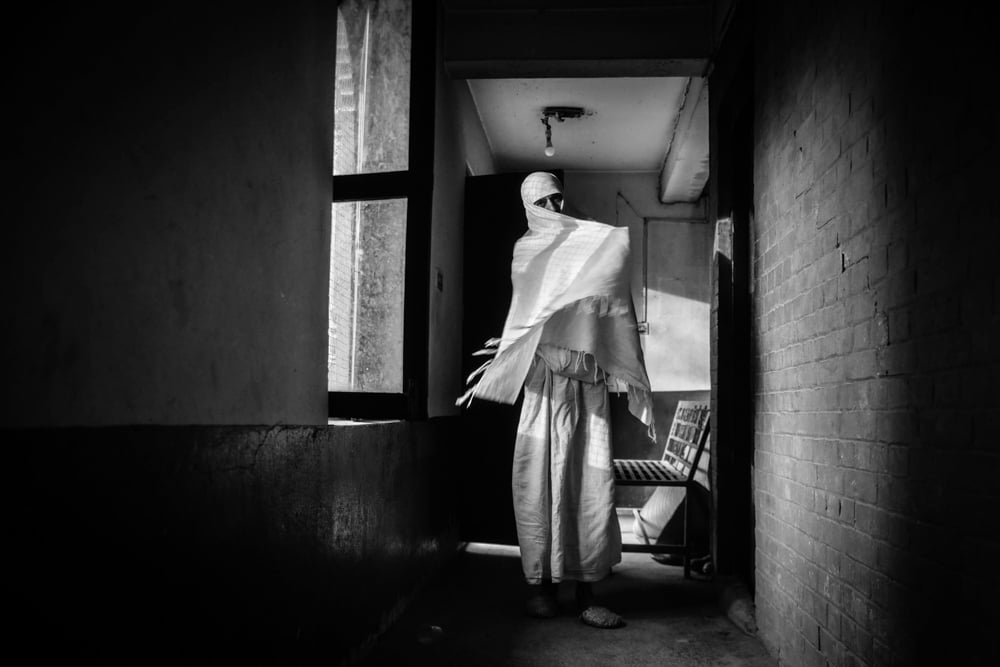

A Surrogate Mourner

Photos (20)

Cover
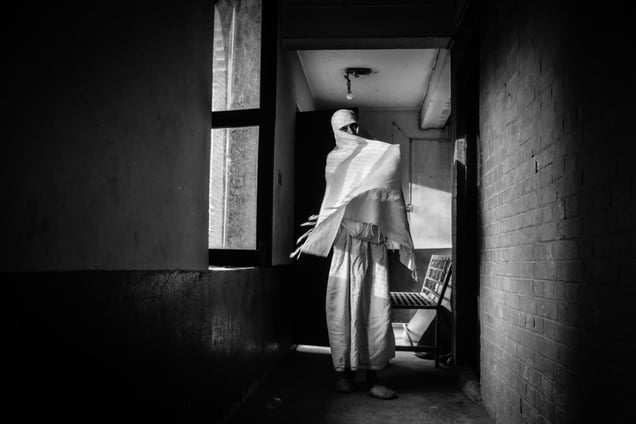
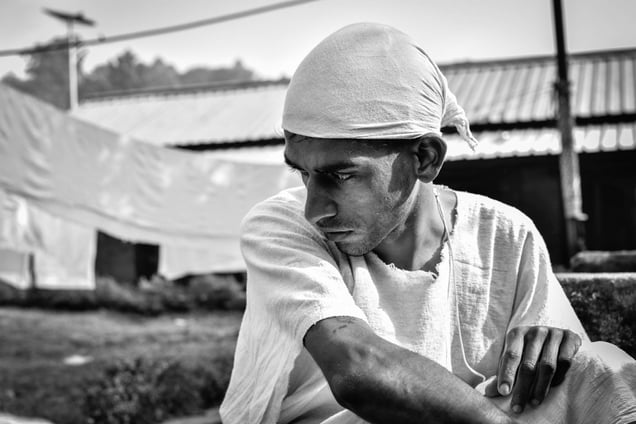
Navaraj Badal, 24, is a mourner by profession. For the past nine years, he has been performing the ‘Kriyaputri’ rituals on behalf of the bereaved. 
"I only continue this profession as it provides with bread and butter for my family, otherwise, I would have to migrate to the gulf seeking menial jobs like other friends of mine.” Eventually, he wants to switch to burning dead bodies in the Ghat. He says it pays better and is not half as excruciating as what he does now.
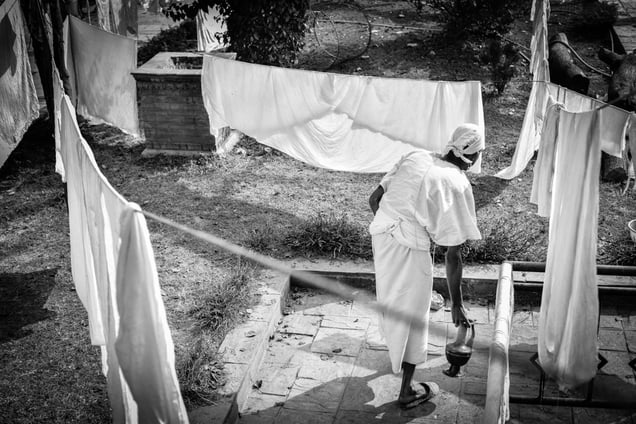
It is said there was a time when mourning rituals were practiced for thirteen years - a long period of penance by the kin to liberate the soul for its ascent into heaven. The period has now been reduced to thirteen days, during which mourners refrain from touching anyone, survive on one meal a day and practice other arduous rituals.
In similar white robes and performing similar rituals as the kin of the deceased, the only difference I could spot was that those who did it professionally looked more bored than somber.
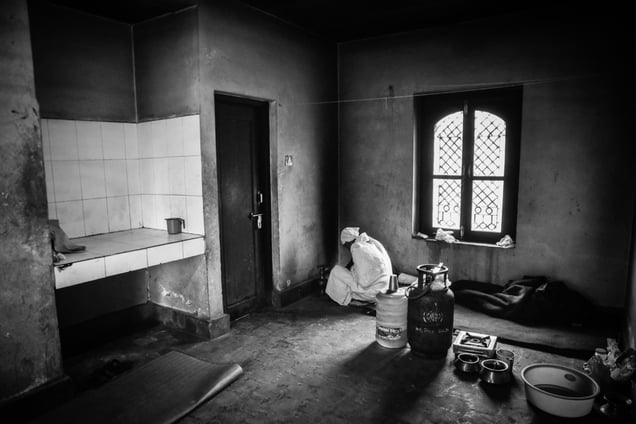
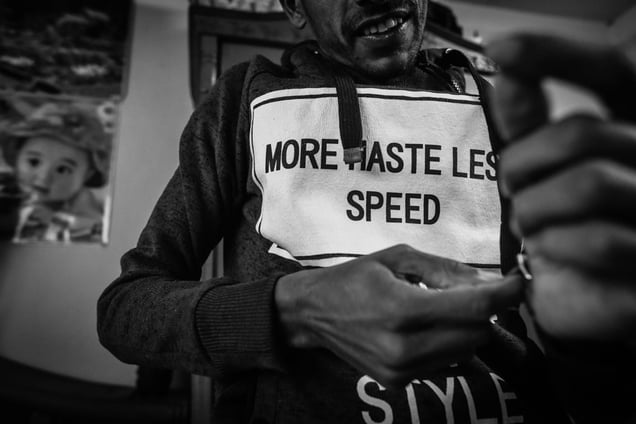
Navaraj diligently follows all the rituals, it has already become a routine for him and a part of his job description. While he is not performing the rites, he is seen busy fiddling with his phone inside the premises or in his secluded room. He likes to play ‘candy crush’ on his phone to keep himself occupied.
It was quite difficult to find a bride for him because of what he does for a living. He only got married a year ago to the daughter of another surrogate mourner. Navaraj longs to go back to his wife and family, with whom he rarely gets time to spend with.
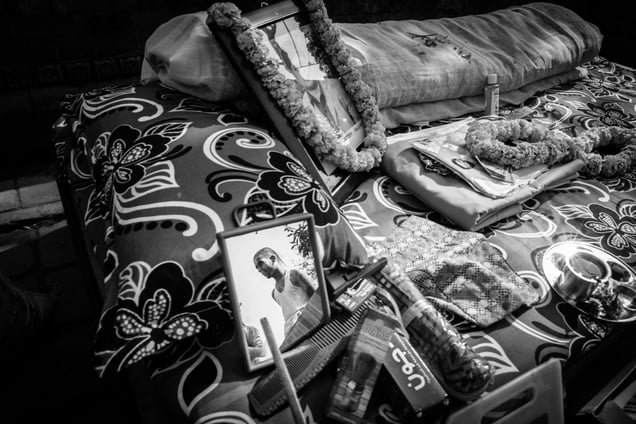
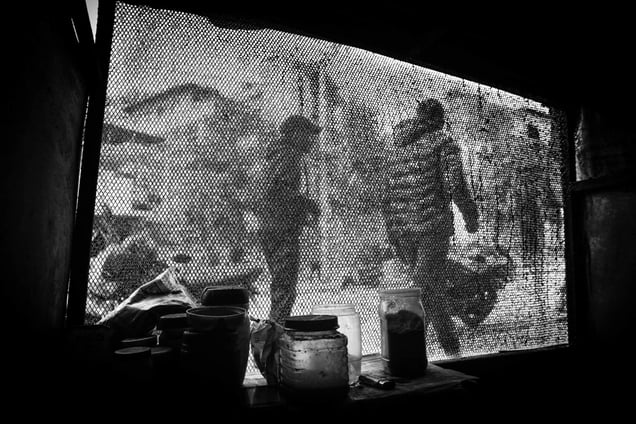
Navaraj seen in the reflection among the items provided as offering (daan) to the priest. The demanding rituals take a toll on their physical health; weaknesses, gastritis, and low blood pressures are common health problems among the professional mourners. Most of them, including Navaraj have strictly refrained their family members from visiting the Kriyaputri house when they are in.
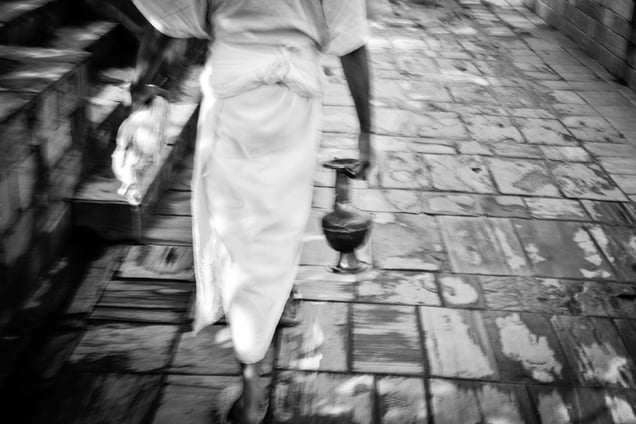
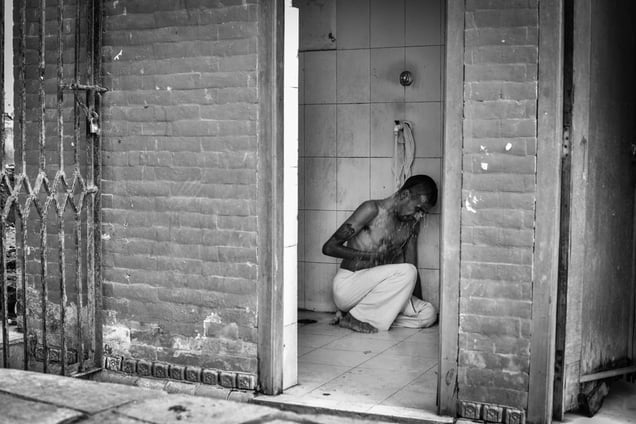
He is expected to take a bath and clean himself before the daily religious rituals everyday. He takes a shower at a public facility inside the Kriyaputri complex.
“At least I would get to return home after a hard day’s work if I had been in any other profession” he laments, “I don’t even know what to write under the ‘occupation’ field when filling up official forms.”
Hiring surrogate mourners for hefty fees is an increasing trend for bereaved families without offspring or for even those who cannot commit themselves to the rituals. Even though the profession pays well, the job has its bouts of social rejection.
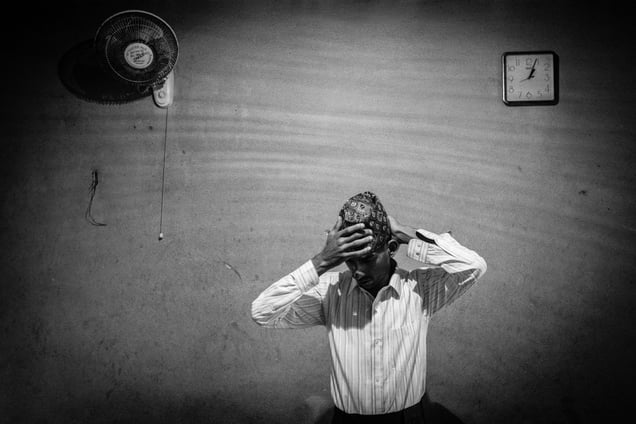
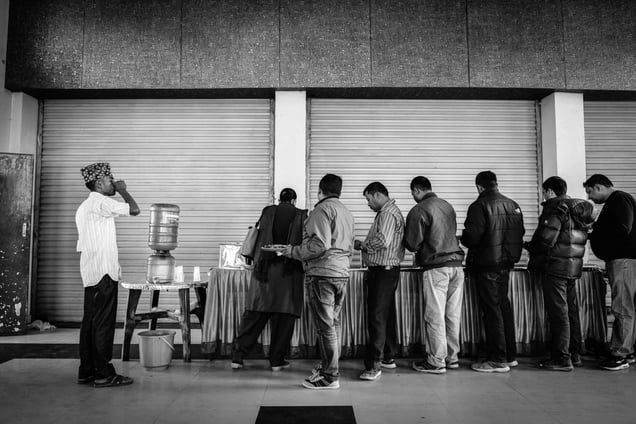
In the picture, he is among the other attendees of the thirteenth day function of the family of his client.
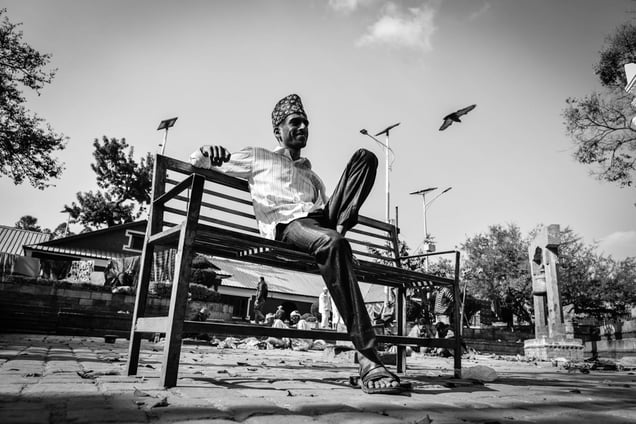
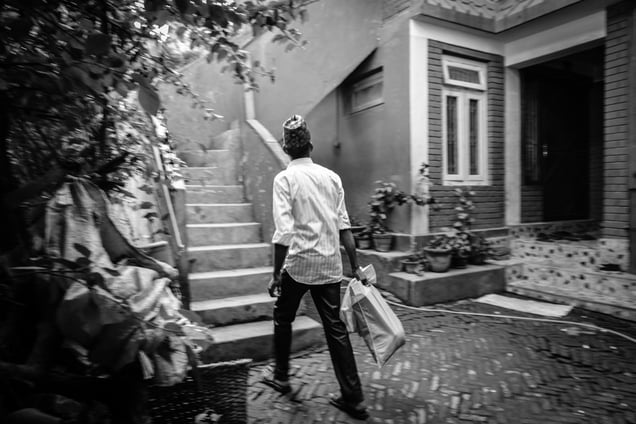
On the thirteenth day, when he gets out of the Kriyaputri Bhawan, he feels as free as a bird. He sets off to his home, to meet his family immediately after the rituals are over.
He is a completely different person once he reaches home.
His attire, personality and attitude undergo a transformation. He compares his profession to a prison sentence, with physically and psychologically demanding job description.
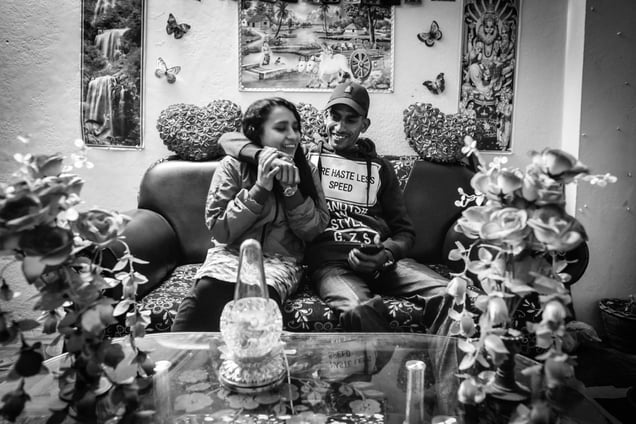
With his wife at his rented room near the temple premises. His wife understands his situation and tries to make most of the time he is at home, which is scarce.
He can go out and meet friends, until his next confinement.
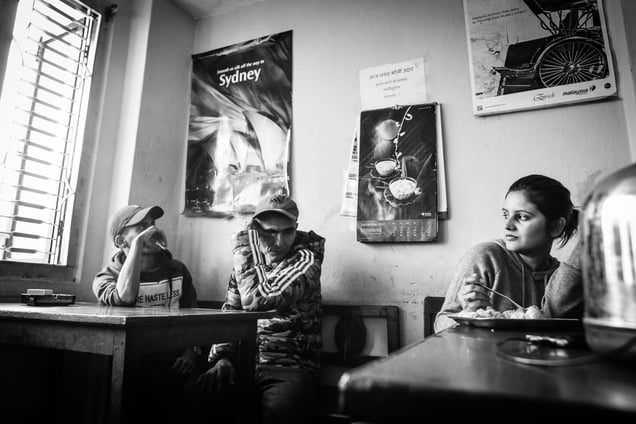
He craves for a decent food and rushes to a nearby restaurant to satisfy his taste buds. He cannot even smoke while he is in mourning.
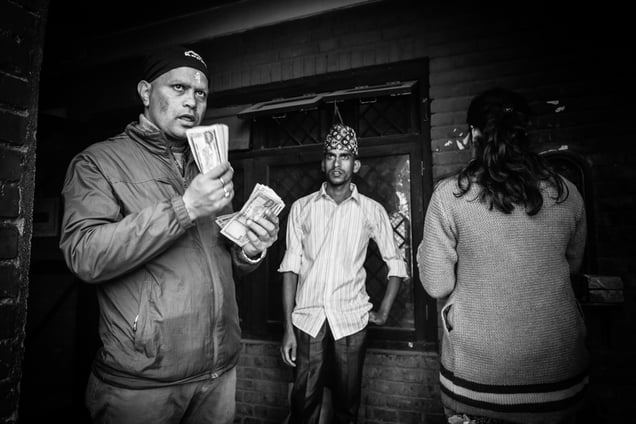
Near the temple premises, a client who lost one of the relatives approach Navaraj and they agree on a sum for Navraj to take up the next job.
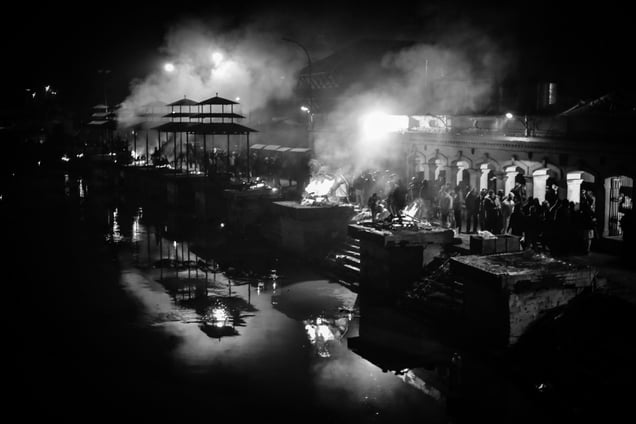
The bodies being cremated at the Ghats of Pashupatinnath temple. The HIndus consider it sacred to be able to cremate their bodies of the deceased relatives by the side of Bagmati river. It is the site of grief and mourning for some while workplace for a few.
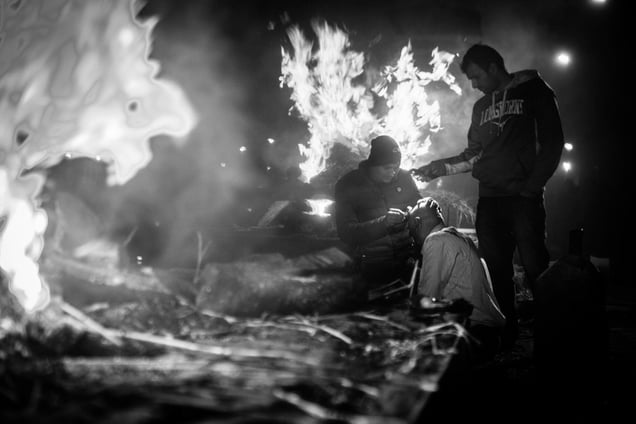
The very next day, he is called for another assignment. He shaves his head by the side of the cremating body and is back to his workplace for another thirteen days,
and the cycle continues..