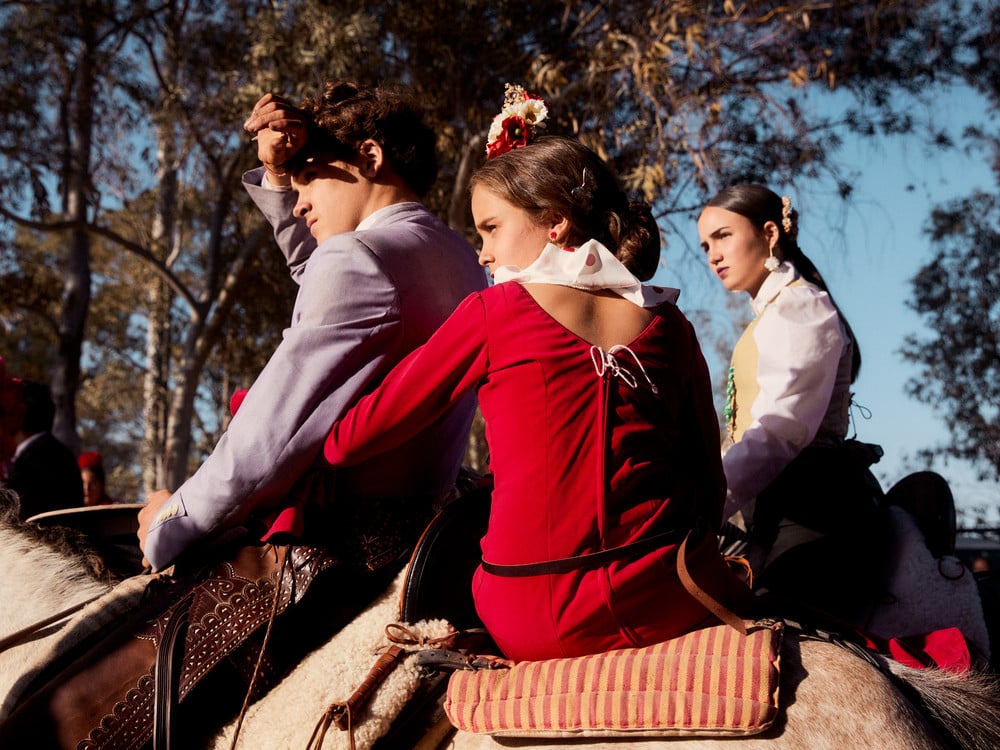

Romería de El Rocío
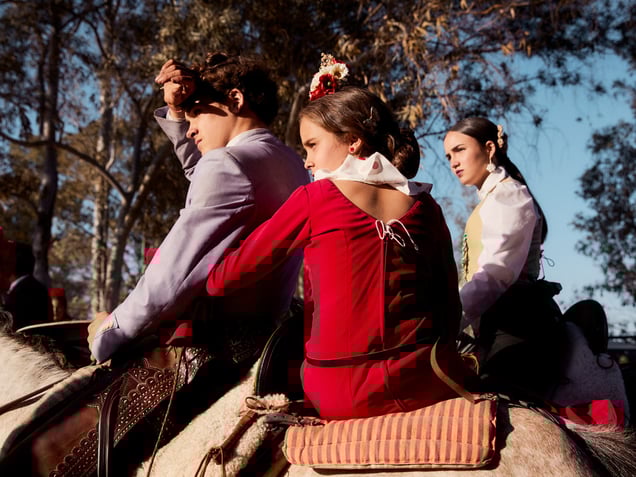
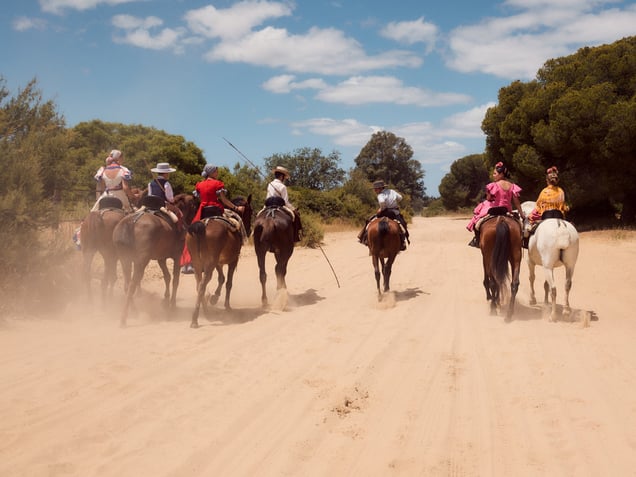
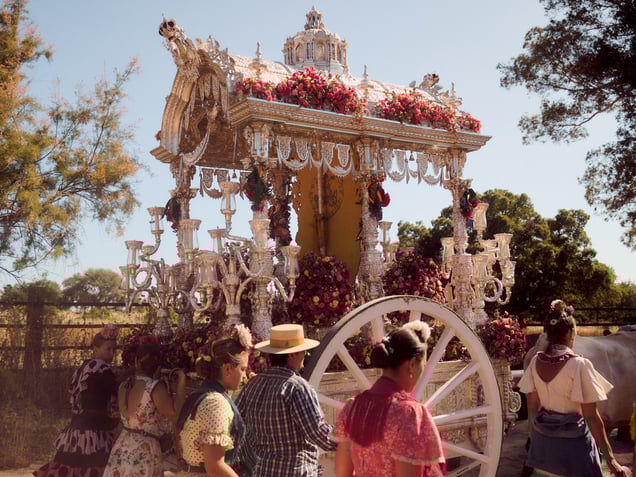
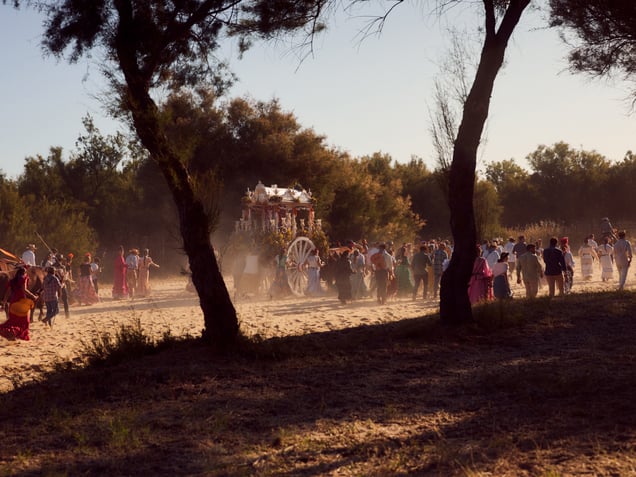
Romería de El Rocío Every May, thousands of pilgrims from across Spain begin the arduous yet joyful journey to El Rocio, a small, unique town in Western Andalusia. It is a place like no other where elegant, whitewashed houses fronted by wooden verandas reminiscent of a wild west film open out onto sandy boulevards. Immaculately dressed men, women and families saunter past on horseback as horse drawn carriages rattle down the street. The sound of excited voices and flamenco music filling the dusty air. The Romeria de El Rocio is one of Spain’s oldest and largest ferias. Its roots date back to the 13th century when, according to local legend, a hunter came across a statue of the Virgin Mary inside a hollowed-out tree trunk. A chapel was built where the tree stood, and it became a place of pilgrimage. Pilgrims travel from all over Andalusia and beyond, often journeying as their ancestors would have hundreds of years ago in ornately decorated ox-drawn wagons. Some pilgrims travel for days on horseback, and many make the journey on foot through beautiful, winding country tracks and sandy plains. The atmosphere is exuberant, chaotic and emotional. On arrival to El Rocio, pilgrims park up their wagons and prepare for days of celebration and impassioned religious ceremonies. Crowds sing and dance as visitors are welcomed into locals’ homes, food and drinks are readily shared, and celebrations go on well into the early morning. In the early hours of Pentecost Monday, the celebration reaches it’s finale when the statue of the El Rocio Virgin is carried outside of her church on the shoulders of the crowd. She is carried atop the bustling sea of people long into the daylight hours as pilgrims weep with emotion as she passes them. Later that day, pilgrims slowly begin preparations for their long and winding journey home. Exhausted, but spirits held high by songs of devotion and the hardship of the trail. Already dreaming of the day they can begin the journey the following year.
No categories selected
Photos (21)