Road East.
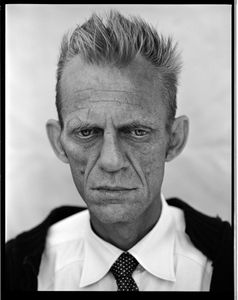
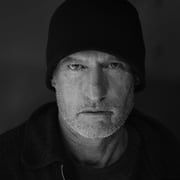
Road East attempts to visually communicate the complex relationship of socio economic borders in portraits and landscapes taken over a decade as I traveled and meandered from Cape Town to East London. The formulaic portraits are situated, disciplined and intentionally photographed on the street. The subjects are separated with a white background in order for the viewer to focus on the embodiment of dress and the faces of each subject. The landscapes are portraits of mostly urban and some rural spaces. The edit creates a different story in the viewer’s mind depending on the dialectical relationship of the image sequence. The images are taken on 4x5 inch color negative and 6x7 cm B&W film. It is impossible to make a life that escapes structural constraints. Examining spaces can reveal who is in power and who controls that space. This can be actual space, spaces and places, or the space in one’s mind or thoughts. Whether the space is physical or mental, “they are imbued with emotional content - and tapping into this can be an effective way of controlling people” (McDougall, 2014). Social and political order rests on an order of the imaginary; imaginary entities are perceived and credited as indisputable social reality. Foucault realized, “the present epoch will be above all an epoch of space” (Foucault 1986:22). How we interact with space is highly emotional. Foucalt realized the need and fight for literal space as populations would grow and compete for resources that cannot be provided. The theoretical thinking of Foucalt is especially relevant as we enter the period of the Anthropocene. The anthropologist, Fiona Ross, began to understand that space was not geographic but cognitive and emotional; a relationship with landscape as embodied, and one of intersubjective experience of time.
No categories selected
Photos (1)