
The Rehearsal of Space
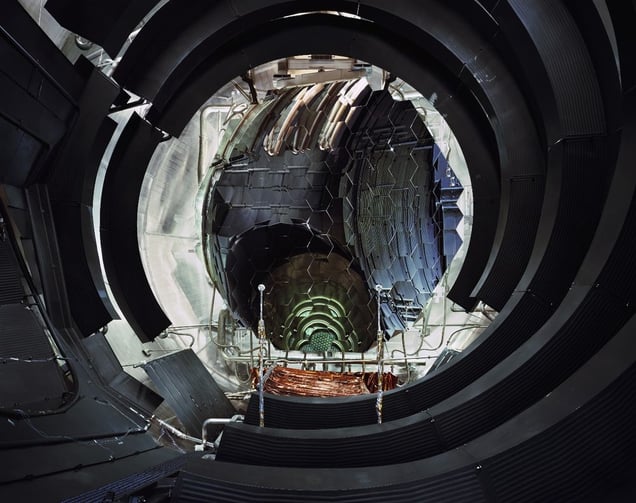
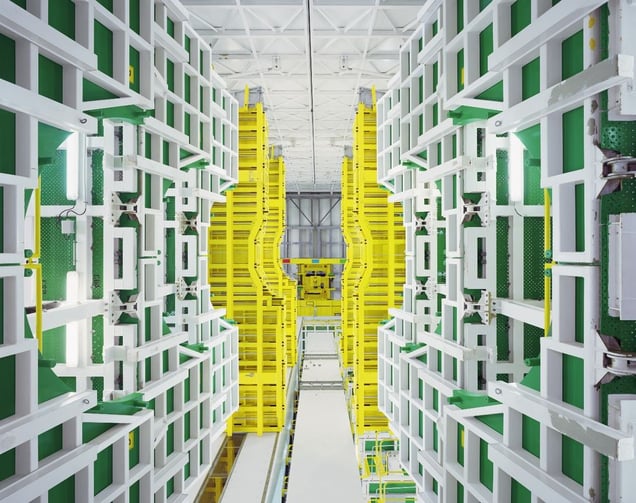
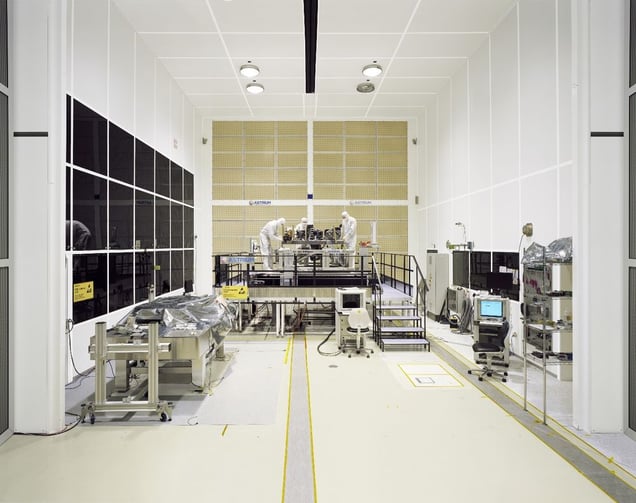
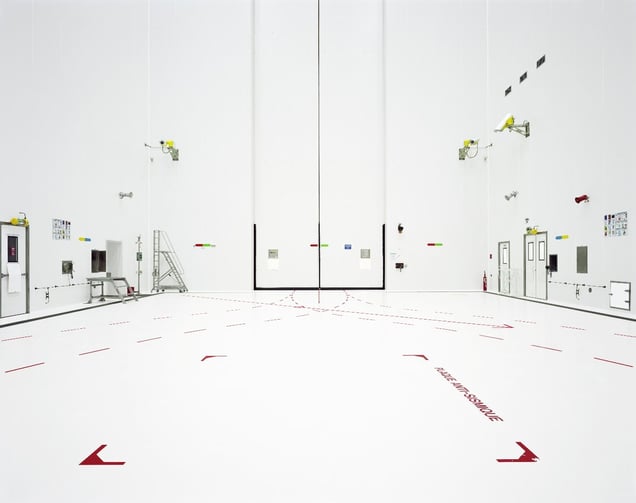
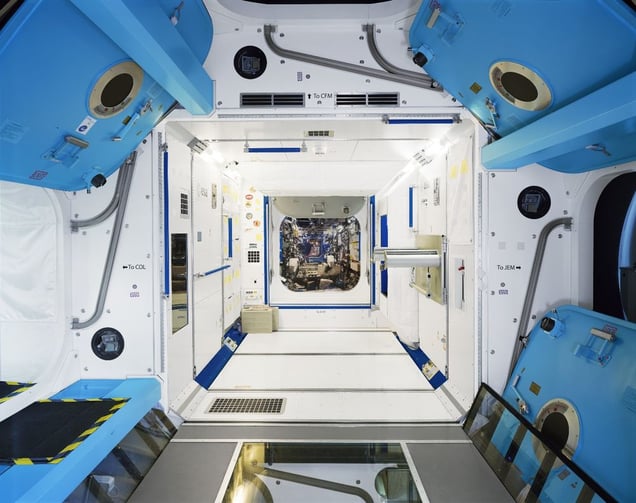
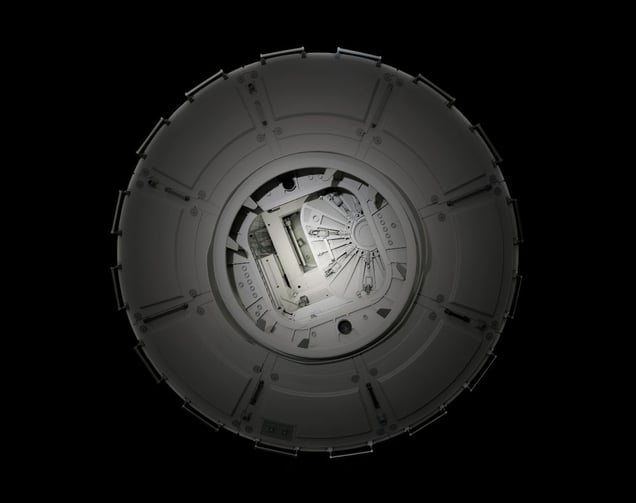
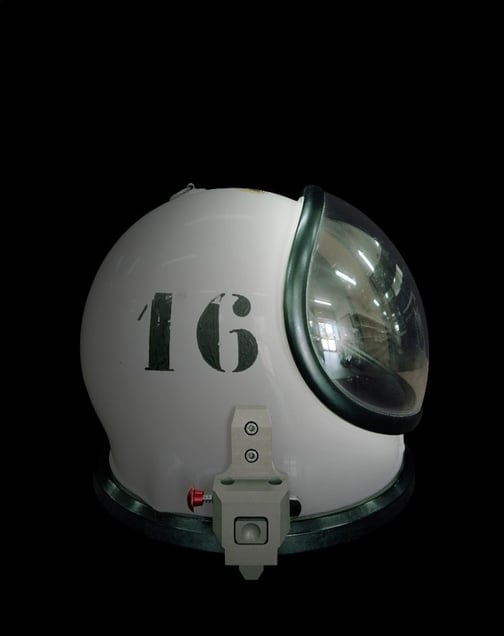
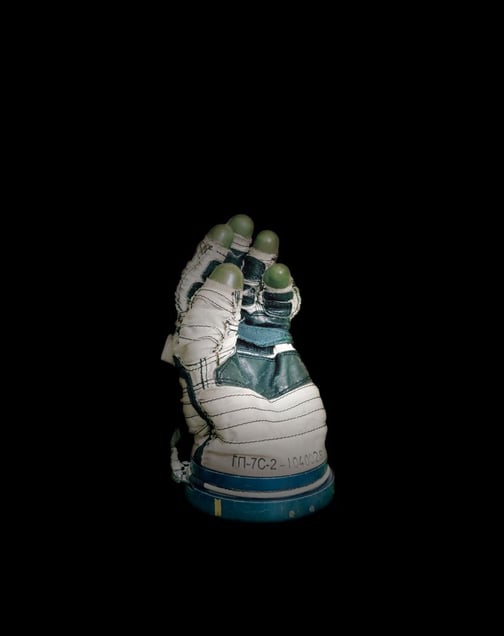
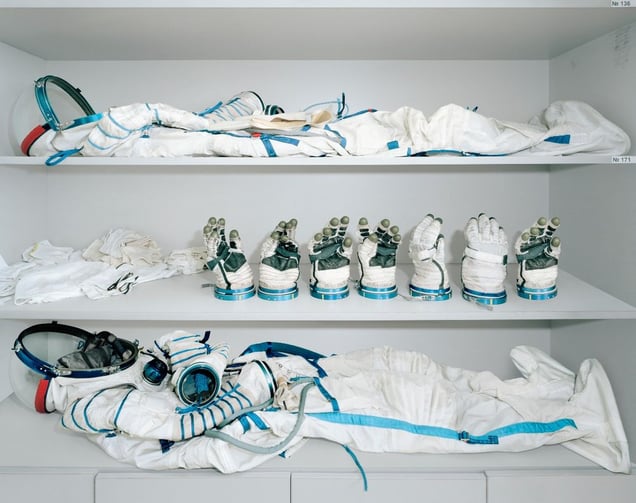
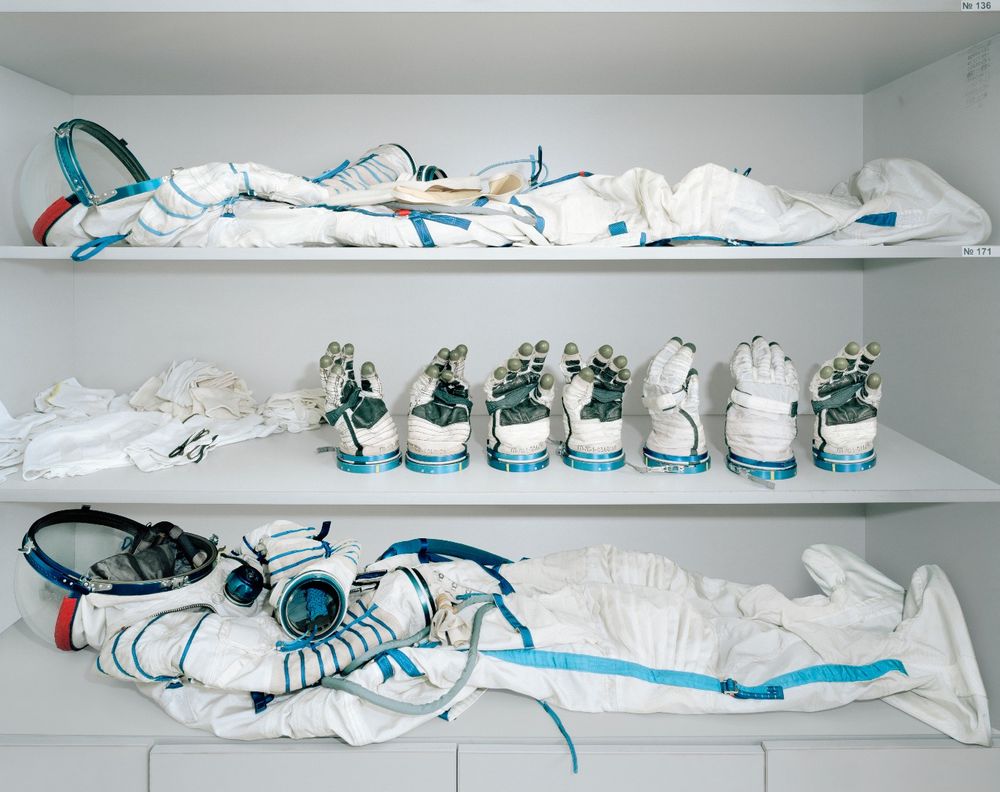
Over the past two years, Edgar Martins has travelled to 20 locations across the UK, The Netherlands, France, Germany, Spain, Russia, Kazakhstan and French Guiana to shoot in classified facilities such as test centres, robotics departments, space simulators, laboratories, launch sites and platforms, astronaut training centres and satellite assembly rooms. The photographs were shot using long exposures (up to one hour) and a 10x8”, large format camera. Their clean composition and hyper-real sharpness contrast greatly with the veil of secrecy and enigma that usually shrouds space-related activity. Although rarely seen by the public, the technology and facilities in The Rehearsal of Space look strangely familiar, underlining popular culture’s influence in shaping our understanding of space exploration (the artist often cites fortuitous references such as Alfonso Cuarón’s Gravity or Pink Floyd’s Dark Side of the Moon). Martins’ rigorous survey reveals the sheer scale of this global scientific endeavour, perhaps the greatest of our time. Altogether, there are over 86 photographs in the series, ranging from the macro – rockets, satellites, training modules, cleanrooms, to micro–components barely visible to the human eye. As always, his approach is both, descriptive and speculative, and it is somewhere between fact and fiction that the photographs take on their full meaning. The Rehearsal of Space documents our quest to penetrate the astrophysical reality of the universe in order to better understand time, space, and matter. In doing so, Martins highlights the wider politics of space exploration, the ever-growing role of science and technology in our society and our relationship with the unknown, whilst opening up wider questions around epistemology, metaphysics and ultimately humanity's conception of itself. The Rehearsal of Space was supported by a variety of public and cultural organisations such as The Arts Council England, The Calouste Gulbenkian Foundation, The EDP Foundation, Instituto Camões Portugal, The Macau Cultural Institute and Faculdade de Ciências e Tecnologia da Unversidade de Coimbra, amongst others. This project has a cross-sector approach and so it will incorporate a variety of audience driven events such as seminars, exhibitions and discussion forums, scheduled to take place at various renowned organisations between 2014 and 2108, such as The Wapping Project Bankside (London April-May 2014); Galerie Melanie Rio (Nantes June-July 2014); The Calouste Gulbenkian Foundation (Lisbon, June-September 2014); The Wolverhampton Art Gallery (Wolverhampton, UK Jan-March 2015); Centro Cultural Paço Imperial (Rio de Janeiro, 2015), amongst many others. Edgar Martins (Portugal, 1977). He completed a BA in Photography at the London College of Printing & Distributive Trades, as well as an MA in Photography and Fine Art at the Royal College of Art (London). His work is represented internationally in several high-profile collections, such as those of the V&A (London), the National Media Museum (Bradford, UK), RIBA (London), the Dallas Museum of Art (USA); Fundação Calouste Gulbenkian (Lisbon), Fundação EDP (Lisbon), Fondation Carmignac (Paris), among others. His first book—Black Holes & Other Inconsistencies—was awarded the Thames & Hudson and RCA Society Book Art Prize. A selection of images from this book was also awarded The Jerwood Photography Award in 2003. In 2010 the Centre Culturel Calouste Gulbenkian (Paris) hosted Edgar Martins’ first retrospective exhibition. Edgar Martins was awarded the New York Photography Award (Fine Art category), BES Photo Prize (Portugal), SONY World Photography Award (Landscape category) and 2010 International Photography Awards (Fine Art— Abstract category); and he was nominated for the Prix Pictet 2009. Martins was selected to represent Macau (China) at the 54th Venice Biennale. He currently lives and works in London.
Photos (9)