Night at Noon
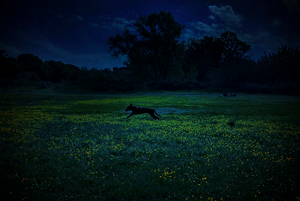
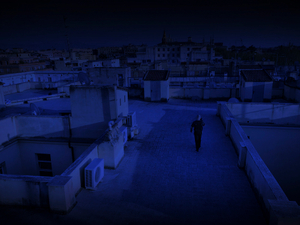
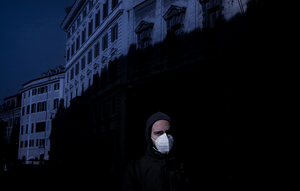
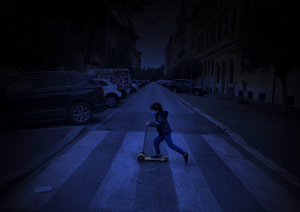
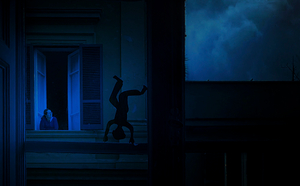
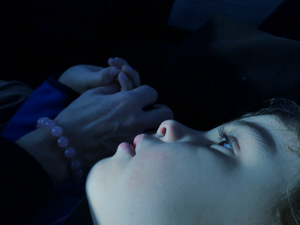
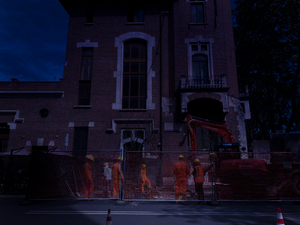
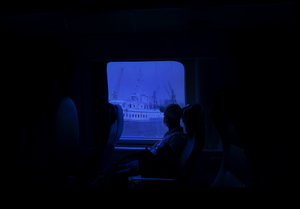
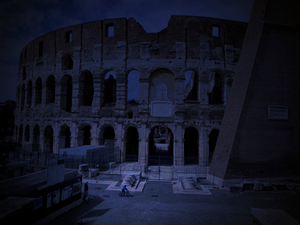
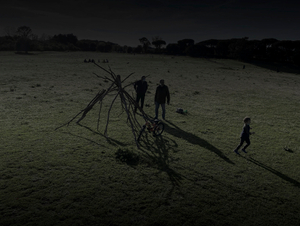
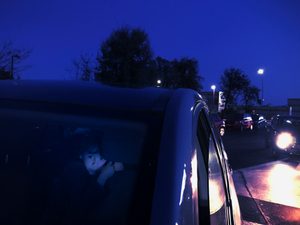
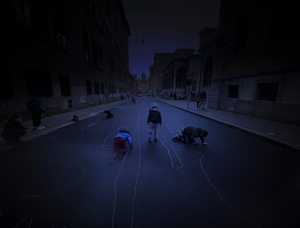
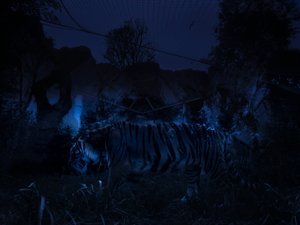
In the 2,5 million years that the species Homo to which we belong has been around on our planet, only a handful of generations have lived through an existential earthquake, a universal upheaval of the extent of that brought on us by the Covid-19 pandemics. How do you go about telling about something so out of the ordinary? To yourself, first. And, then, to others. I am one of around 7 billion people who are living through this storm. ''Night at Noon'' has been my way to use photography to try and make sense of what I saw happening. In the old days of cinema, when cameras could not see in the dark nearly as well as they do now, cinematographers used an artifice to film scenes set at night. They filmed them during the day, using a set of photographic tricks that went under the name of ‘’day for night’’. Italian cinematographers (Italy had truly great ones at the time) called the effect ‘’the American Night’’ (La Notte Americana). The tricks included dangerously underexposing, the skillful use of polarizing filters, variable neutral filters, all sorts of color filters (mostly in the various shades of blue and magenta) and of color sheets in front of lighting or flashes. The results of this artifice varied greatly in quality, depending on the craft of the cinematographer. By and large, however, I think they never managed (or maybe never intended) to realistically reproduce the night. Rather, they created an idea of night, a reflection of the night, an image of night which I always found, in a strange way, magic. A night which was not night. A special space where the night was lit by the day. That surreal atmosphere that only nights lit by the full moon can approach. This ambiguity, the ambiguity of a time suspended that is not day and is not night, is exactly what photographically attracted me to these old tricks when, many years later, the pandemics struck and our lives changed so suddenly and unexpectedly. Many years later, in fact, came a time when I felt that the sun rose as usual, but the day did not break. When the sun rose but the night did not give in to the day. Not entirely, at least. This time is now. I do not mean the night as bad. I am interested in the night as essentially different from the day. The night as a space where we are more alone with ourselves. As a time where we are closer to the instinctive depths of life. A time of intimacy as well as a time of estrangement . A time of dreams and of nightmares. Of hope and regret. A time of waiting. When the pandemics hit, life had to go on. The sun still rose but, somehow, the casual automatism, the familiar clarity, the comforting noise typical of the day were gone. People still went out but their walks through the deserted cities - with their senses more alert, their minds more inclined to wonder loose in uncharted territories, their hearts beating faster - had more the feel of walks in the woods at night. People still met each other, or tried to, but their meetings – more dangerous and tender, more deliberate and memorable – felt more like the night-time encounters and the clandestine reunions common during times of war, when it is too risky to meet under the light of day. And it is not by accident that the main protagonist of this series is Martino, my seven year-old son. This was a time parents had to be close to their kids. I must have been around his age when I first got fascinated by the uncanny magic of the American Night watching films. He was living through it for real. Time will tell how this impacted his generation, a generation of kids who were just starting to look out to the world. I am confident that they may have learnt how very bad things can happen, even things that shake the fundamental pillars of existence, but that life can and does go on. This is ‘’Night at Noon’'. A visual jimmy, an unorthodox key - stolen from an old cinematographic trick - I used to force open a window on the year we have lived and the time we are still living. A key that allowed me to go out with my camera during the day, with the sun up in the sky, but to look at things differently. In a way that did not reflect their appearance but that revealed a part of their essence that is invisible in the light of day. Like in a luminous night. (Note: For the captions of the individual pictures I used the notes that I found written on my notebook in the day the picture was taken. When I had written nothing about the picture, in the caption, I use the term ''blank''. )
No categories selected
Photos (23)