Line
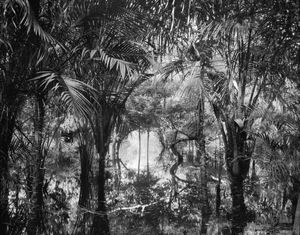
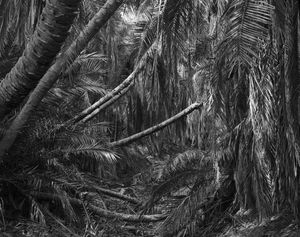
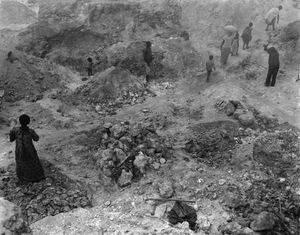
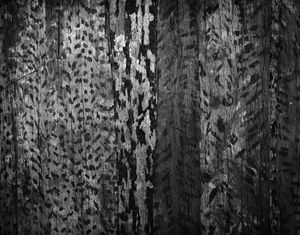
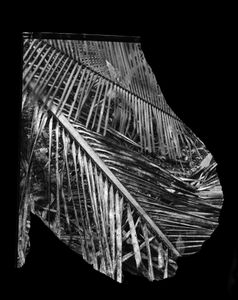
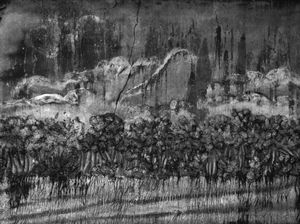
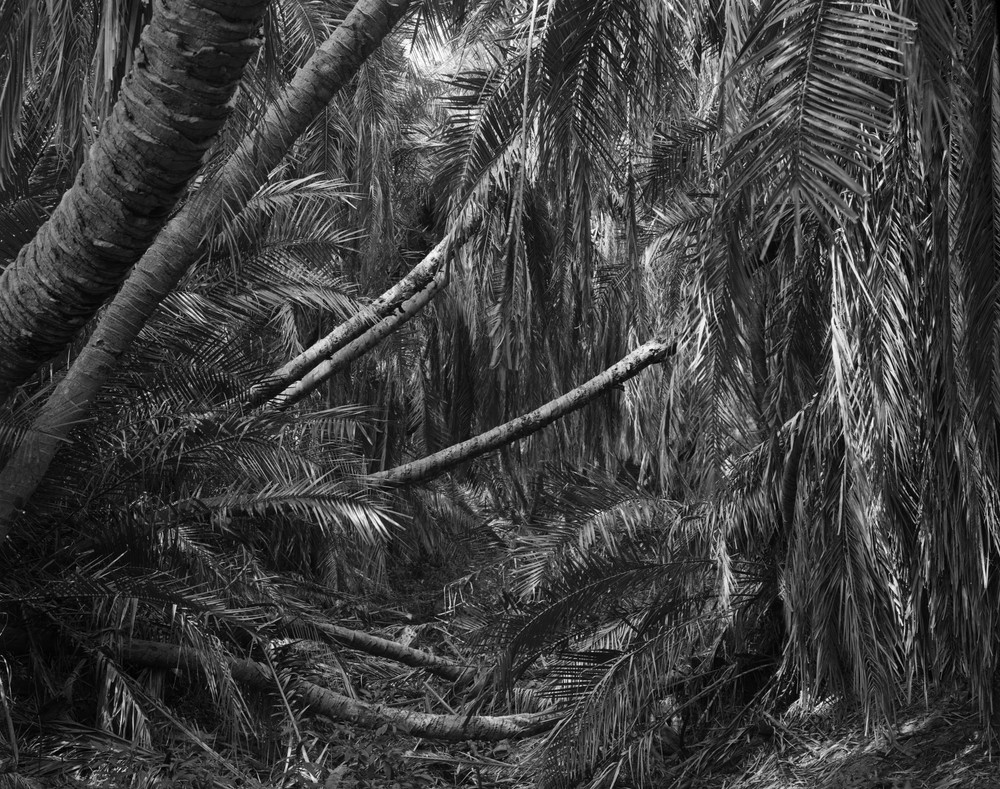
For several years I have photographed primary hardwood forests along the imaginary line of the equator to communicate, persuade and warn of the continued ecological destruction that is occurring along this line. My plan was to capture arcadian visions of equatorial hardwood primary forests before they are destroyed (an act of documentation and advocacy even), and to show how this arcadian vision is disrupted by a more dystopian one. The images in this project were taken in three areas that circle the equator: Southeast Asia, Africa and South America, where over half the world’s rainforests are concentrated and which I visited in order to follow the line. Line is an attempt to understand the current pressures on the equatorial environment and create a photographic exploration of ecology that highlights and foregrounds land, space, territories, boundaries and power. My work is an investigation into the entanglement of this history in the present and of “how imagined boundaries emerge and are articulated, spatio-political domains, what boundedness is, and how power moves from and into the land” (Nuttall, 2005: 225). Travelling along the line of the equator made me realise that the environmental problems in the post and neo colonial equatorial zones of Africa, Asia and South America are similar and interlinked. The political ecology of each equatorial zone shares different yet similar colonial legacies that have led to the current problems of neoliberal exploitation and deforestation. These countries, “with emerging economies, some with poor governance and corruption often have poor environmental policies that multinational companies use to their advantage” (Kabemba, 2013: n.d. online). In almost every tropical rainforest, “capitalism, neoliberalism, industrialization, contract secrecy, mining, tax evasion, transfer pricing, corruption, clear cut logging, urban sprawl and destruction” (Kabemba, 2013: n.d. online) are, and were, evident in various forms. Foreign investor syndicates “consciously engaged in ‘shape shifting’ [using supply chains] leaving it unclear who is responsible for the economic, human and environmental consequences” (Gewald & Soeters, 2010: 159). The neoliberal strategies of multinational companies have allowed for an unknown and undocumented situation in which forests are literally disappearing. Over my years spent on this project I have witnessed “time’s relentless melt” and can bear witness to the vulnerability of nature.
No categories selected
Photos (6)